
Symptoms | Causes | Diagnosis | Treatment
A common cause of chronic groin pain
Osteitis pubis is a painful inflammatory condition affecting the pubic symphysis, the joint located at the front of the pelvis where the left and right pubic bones meet. The condition develops when repetitive stress, overuse, trauma, surgery, or pregnancy-related changes lead to inflammation within and around the joint.
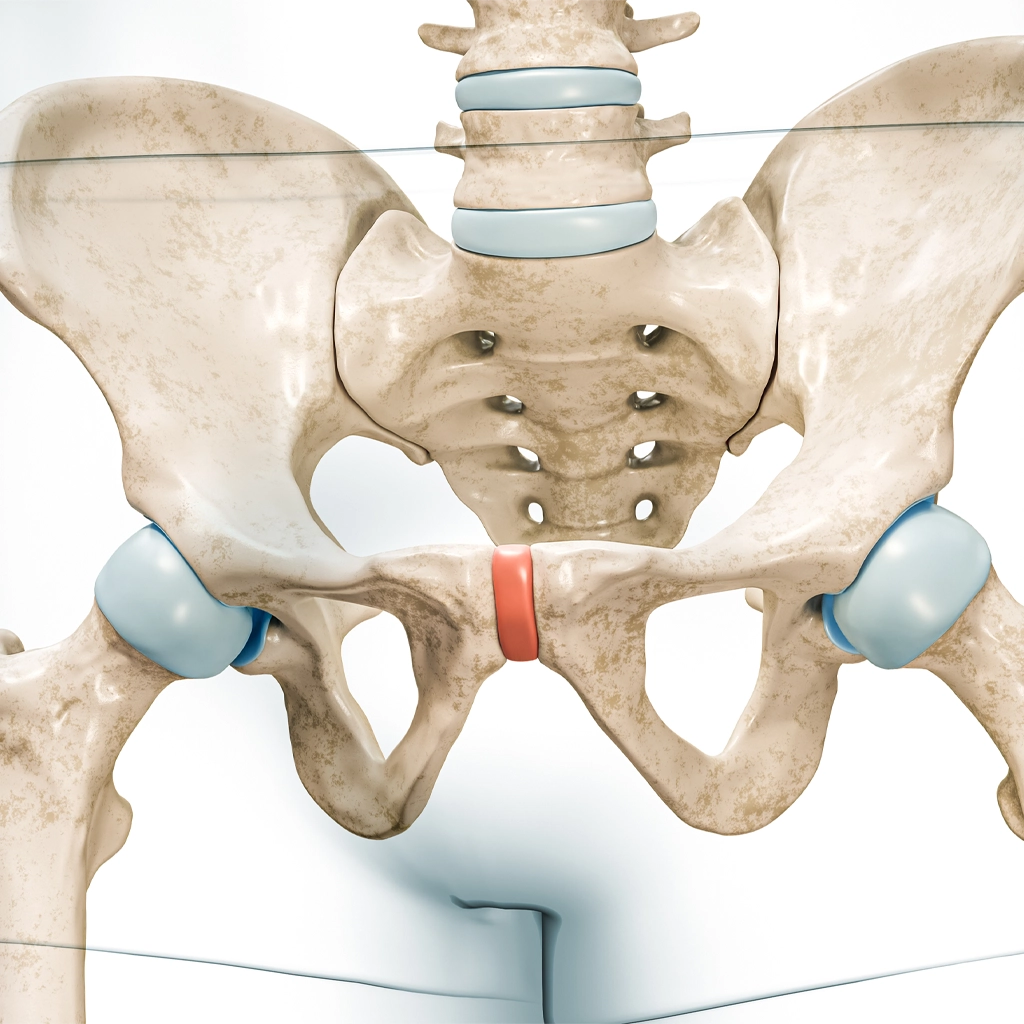
Although osteitis pubis can affect anyone, it is particularly common among athletes who participate in sports that involve running, kicking, cutting, or rapid changes in direction. Soccer players, hockey players, runners, football players, and other active individuals are frequently affected.
For many patients, symptoms gradually improve with conservative treatment. However, some people develop chronic inflammation that causes persistent pain and limits daily activities, exercise, and athletic performance.
What are the symptoms of Osteitis Pubis?
Symptoms may develop gradually or appear after an injury or period of increased activity.
Common symptoms include:
- Pain in the center of the groin or pelvis
- Tenderness directly over the pubic bone
- Pain that radiates into the inner thighs, lower abdomen, or hips
- Pain when running, sprinting, kicking, twisting, or climbing stairs
- Discomfort when getting out of a car or turning in bed
- Reduced athletic performance
- A clicking or popping sensation in the pelvis
Many patients describe the condition as a nagging groin pain that never completely goes away and becomes worse with activity.

What causes Osteitis Pubis?
The pubic symphysis serves as an important stabilizing structure within the pelvis. Repetitive stress can cause irritation and inflammation within the joint and surrounding tissues.
Potential causes include:
- Repetitive athletic activity
- Running and high-impact exercise
- Soccer, hockey, football, and other cutting sports
- Pregnancy and childbirth
- Pelvic or abdominal surgery
- Trauma to the pelvis
- Muscle imbalances involving the core, hips, and groin
Over time, ongoing inflammation can lead to chronic pain and functional limitations.
Why does Osteitis Pubis become chronic?
Most cases improve with rest and rehabilitation. However, in some individuals, inflammation persists despite months of conservative treatment.
Advanced imaging studies have shown that chronic inflammatory conditions often develop abnormal small blood vessels and ongoing inflammatory signaling within the affected tissues. This chronic inflammatory cycle may contribute to persistent pain even after the original injury has healed.
Patients who continue to experience symptoms for several months despite treatment should undergo further evaluation to determine whether additional treatment options may be appropriate.
How is Osteitis Pubis diagnosed?
Diagnosis begins with a thorough medical history and physical examination.
Because several conditions can cause similar symptoms, your physician may recommend imaging studies to confirm the diagnosis and rule out other causes of groin pain.
Diagnostic testing may include:
- MRI: MRI is often the most useful imaging study for diagnosing osteitis pubis. It can identify inflammation, bone marrow edema, and soft tissue abnormalities around the pubic symphysis.
- X-Ray: X-rays may reveal chronic changes involving the pubic symphysis, including widening, irregularity, or degeneration.
- CT Scan: CT imaging provides detailed visualization of bony changes within the pelvis and pubic symphysis.
Osteitis Pubis vs. Sports Hernia
Many patients with chronic groin pain wonder whether they have osteitis pubis or a sports hernia.
While both conditions can cause groin pain in athletes, they involve different structures:
- Osteitis pubis involves inflammation of the pubic symphysis joint.
- Sports hernia (athletic pubalgia) involves injury to muscles, tendons, or soft tissues of the lower abdominal wall.
The symptoms often overlap, and some patients may have both conditions simultaneously. A thorough evaluation and appropriate imaging are important for establishing an accurate diagnosis.
Traditional treatment options for Osteitis Pubis
Most patients begin with conservative treatment, including:
- Rest and activity modification
- Physical therapy
- Core and pelvic stabilization exercises
- Anti-inflammatory medications
- Corticosteroid injections
Many patients improve over several weeks or months with these approaches.
For severe cases that persist for 6–12 months or longer, surgical treatment may occasionally be considered. Surgical options can include removal of inflamed tissue, stabilization procedures, or treatment of associated tendon injuries.
When should you seek additional treatment?
You may benefit from further evaluation if:
- Groin pain has lasted longer than 3–6 months
- Conservative treatment has not provided relief
- Symptoms are interfering with sports or daily activities
- MRI continues to show inflammation
- You want to avoid surgery if possible
North Star Vascular & Interventional is among the first centers in the United States offering Osteitis Pubis Embolization (OPE), an innovative minimally invasive treatment for select patients with chronic osteitis pubis.