
Shoulder Embolization: Relief without surgery
Shoulder embolization is a cutting-edge, non-surgical treatment for chronic shoulder pain caused by frozen shoulder or rotator cuff tendinitis.
This outpatient procedure targets the abnormal blood vessels that sustain inflammation in the shoulder, providing long-term relief and improved motion — all without anesthesia, hospitalization, or scarring.

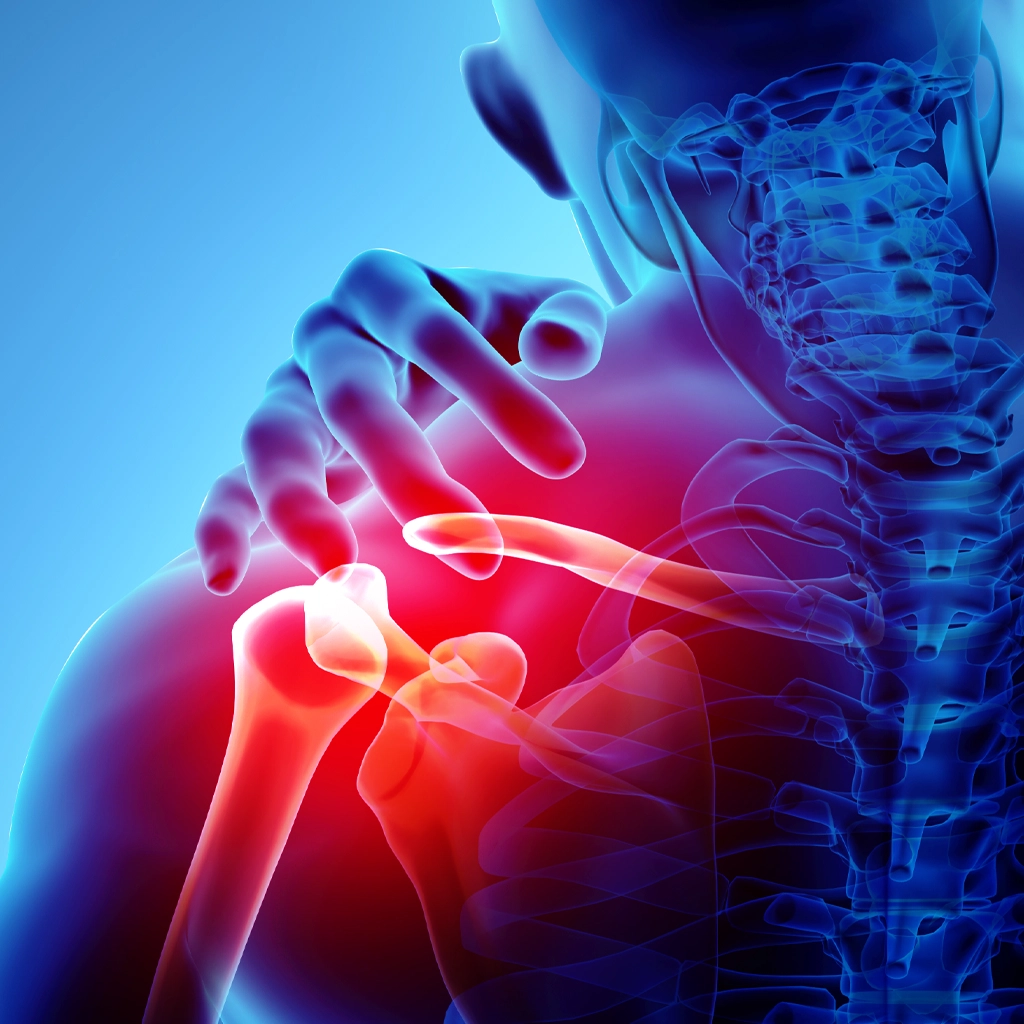
How Shoulder Embolization Works
During the procedure:
- One of our board-certified interventional radiologists inserts a tiny catheter into an artery in your wrist or groin.
- Using real-time X-ray guidance, the physician identifies the abnormal blood vessels around the shoulder joint or tendons.
- Tiny particles are used to partially block (or “embolize”) those vessels.
- This decreases inflammation, eases pain, and allows natural healing to occur.
Most patients go home the same day and experience noticeable improvement within days.
Benefits of Shoulder Embolization
- High success rate — up to 85% of patients report major improvement
- No general anesthesia
- No stitches or surgical scarring
- Outpatient procedure — go home the same day
- Short recovery time
- Minimal pain and few side effects
- Cost-effective alternative to surgery
Recovery and Results
- After the procedure, most patients experience:
- Gradual reduction in shoulder pain and stiffness
- Improved range of motion
- Decreased reliance on pain medications
- Return to normal activity levels within days
Mild soreness or bruising near the catheter site may occur but usually resolves quickly.
Preparing for Shoulder Embolization
- Inform our team of all medications and supplements you’re taking.
- You may need to pause blood-thinning or anti-inflammatory medications before the procedure.
- Notify us of any allergies, particularly to contrast dye or anesthetics.
- Avoid eating or drinking for several hours prior (as directed).
- Plan to rest briefly after your procedure before returning home.
FAQs
Frozen shoulder (adhesive capsulitis) and chronic rotator cuff tendinitis.
The procedure is performed under local anesthesia with light sedation. Most patients report minimal discomfort.
A clinical study consisting of 346 patients who underwent frozen shoulder embolization to the treatment of chronic inflammatory joint pain demonstrated the following results:*
Technical success rate: 95.8%
Major adverse events: None
Range of motion increase:
Anterior elevation: -55.6 degrees
Abduction: -64.7 degrees
Mean decrease in pain score:
At 1 week: 3.1
At 1 month: 4.0
At 3 months: 4.2
At 6 months: 5.1
At 12 months: 5.5
*J Vasc Interv Radiol 2022; 33:538–545 https://doi.org/10.1016/j.jvir.2022.01.013
Many patients feel relief within a few days, with continued improvement over several weeks.
Complications are rare. The most common side effects are mild bruising or soreness at the catheter site.
Some patients benefit from light exercises or physical therapy to regain strength and flexibility.
In a study of 346 patients, the procedure demonstrated a 95.8% technical success rate. This means that in the vast majority of cases, the interventional radiologist was able to successfully target and treat the intended areas.
Study results showed significant and progressive pain reduction over the course of a year. On a standard pain scale, patients reported the following average decreases in pain:
- 1 Week: 3.1 point reduction
- 1 Month: 4.0 point reduction
- 3 Months: 4.2 point reduction
- 6 Months: 5.1 point reduction
- 12 Months: 5.5 point reduction
This suggests that the benefits of the treatment often continue to improve for several months following the procedure.
Yes, particularly for those suffering from shoulder pain. The study recorded significant improvements in shoulder mobility:
- Anterior Elevation: Increased by an average of 55.6°
- Abduction (lifting the arm to the side): Increased by an average of 64.7°
If you suffer from chronic joint pain that has not responded well to conservative treatments (like physical therapy or medication), arterial embolization may be an option. You should consult with an interventional radiologist to review your specific case.
Get Back to Moving Comfortably
If chronic shoulder pain is holding you back, shoulder embolization may offer the relief you’ve been searching for — without surgery or long recovery. Call (952) 960-9399 or fill out the form below to schedule your consultation. We’ll work closely with your care team to ensure you have all the information needed to make an informed decision about your treatment.