It can be easy to mentally file prostate health under “things older men worry about”, until you do the math on what “older” actually means. Some of America’s favorite celebrities are getting older.5 Did you know that Brad Pitt is 62? And Matthew McConaughey is 56? Here are a few others:
- George Clooney- 65
- Mark Wahlberg- 55
- Paul Rudd- 57
- Robert Downey Jr. – 61
The point is, many people feel like young bucks well into the time frame where… well, they aren’t. By age 60, roughly half of all men develop some degree of enlarged prostate, also known as Benign Prostatic Hyperplasia (BPH).¹ And because symptoms usually develop gradually, it’s easy to dismiss them or “power through until it goes away”. The problem is that an enlarged prostate only gets worse as time goes on.
There is good news, though. Today, men have far more options than previous generations, including minimally invasive outpatient treatments that don’t involve major surgery.
What is Benign Prostatic Hyperplasia (BPH)?
Benign Prostatic Hyperplasia is the medical term for an enlarged prostate, and is very common among men over the age of 50. By age 60, roughly half of all men have some degree of BPH. By age 85, that number climbs higher to approximately 90%.¹
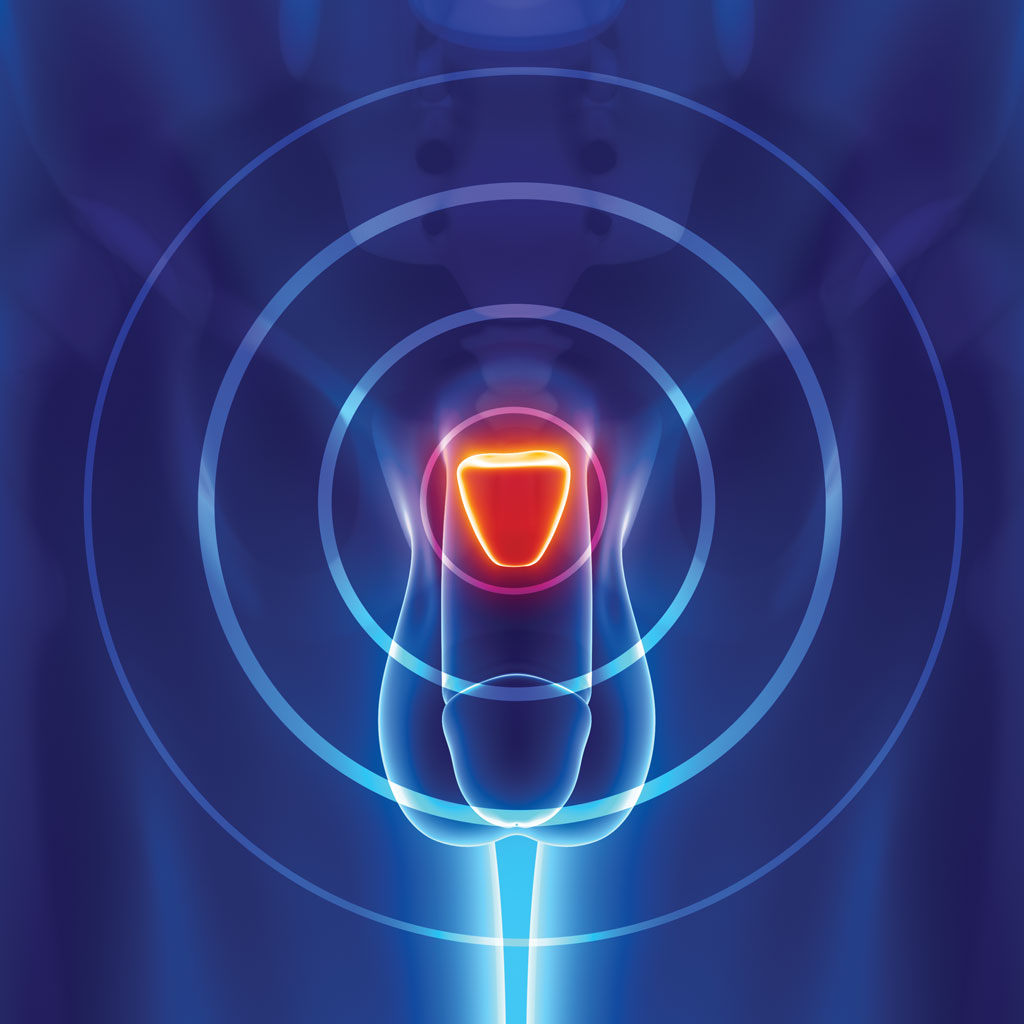
The prostate is a walnut-sized gland that sits just below the bladder and surrounds the urethra – the tube that carries urine out of your body. As men age, the prostate tends to grow. If it grows too much, it can compress the urethra and make urinating difficult, disruptive, and can get worse without intervention.
Despite how common it is, BPH remains one of the most underreported conditions in men’s health. The tendency to normalize symptoms means this condition can advance quietly until the disruption becomes impossible to dismiss.
Recognizing enlarged prostate symptoms
The enlarged prostate symptoms that signal BPH rarely arrive all at once. They accumulate gradually, making it easy to rationalize them as ordinary aging rather than as signs of a treatable condition.
Here’s what to watch for:
- Frequent urination, particularly at night
- A weak or interrupted urine stream that seems to have lost its force
- Difficulty starting urination, even when the urge is strong
- The feeling that your bladder never fully empties, no matter how long you wait
- Sudden, urgent urges to urinate that are difficult or impossible to hold
- Dribbling at the end of urination, which can be as frustrating as it is inconvenient
- Recurrent urinary tract infections without a clear explanation
If two or three of those sound familiar, that’s not age gracefully asserting itself — that’s your body sending signals worth acting on. Left unaddressed, BPH can progress to bladder damage, kidney complications, and complete urinary retention, which becomes a medical emergency.²
BPH treatment options for men over 50 (you have more choices than you think!)
A diagnosis of BPH is not a sentence. The landscape of BPH treatment options for men over 50 has expanded considerably, and many men are surprised to find that surgery is far from their only path forward.
For mild to moderate symptoms, lifestyle modifications and medications are typically the first line of defense. Alpha-blockers relax the muscles around the prostate and bladder neck to ease urination. 5-alpha reductase inhibitors can shrink the prostate over time. These medications help many men, though side effects — including sexual dysfunction — lead others to explore alternatives.³
When medications aren’t sufficient, or when men want to avoid long-term pharmaceutical dependency, minimally invasive procedures have become increasingly compelling options.
Prostate Artery Embolization: The option most men have never heard of, but would probably choose
Prostate Artery Embolization, or PAE, is one of the most significant developments in the prostate artery embolization vs surgery conversation — and it deserves far more visibility than it typically receives.
PAE is a non-surgical, image-guided procedure performed by an interventional radiologist. Through a small incision — typically in the wrist or groin — a catheter is guided to the arteries supplying blood to the prostate. Microscopic particles are introduced to partially reduce blood flow to the enlarged tissue, causing it to shrink over time and relieve pressure on the urethra.
For men who want an effective solution without the risks and recovery of traditional surgery, PAE offers a meaningful alternative. No general anesthesia is required in most cases. The procedure is performed on an outpatient basis, with most men returning home the same day. There is no cutting, no tissue removal, and no multi-day hospital stay. Recovery is typically measured in days rather than weeks. Importantly, PAE has demonstrated a significantly lower rate of sexual side effects — including retrograde ejaculation and erectile dysfunction — compared to surgical options like TURP (Transurethral Resection of the Prostate).⁴
BPH is treatable- so treat it today!
BPH is not a catastrophe. It is one of the most common, most treatable conditions in men’s health. But like most things in medicine, awareness and early action give you the most control over the outcome. If you’ve been diagnosed with an enlarged prostate and want to avoid surgery, PAE may be right for you.
Learn more about PAE at North Star Vascular and Interventional and schedule a consultation with our prostate specialists.
References
- Lepor, H. (2005). Pathophysiology of benign prostatic hyperplasia in the aging male population. Reviews in Urology, 7(Suppl 4), S3–S12.
- McVary, K.T., et al. (2011). Update on AUA guideline on the management of benign prostatic hyperplasia. Journal of Urology, 185(5), 1793–1803.
- Roehrborn, C.G. (2008). Benign prostatic hyperplasia: an overview. Reviews in Urology, 10(Suppl 1), S3–S14.
- Carnevale, F.C., et al. (2013). Prostatic artery embolization as a primary treatment for benign prostatic hyperplasia. CardioVascular and Interventional Radiology, 36(3), 579–589.
- Vascular and Interventional Partners. Spotlight on Health: 11 Celebrities Who Discovered the Magic of Minimally Invasive Procedures